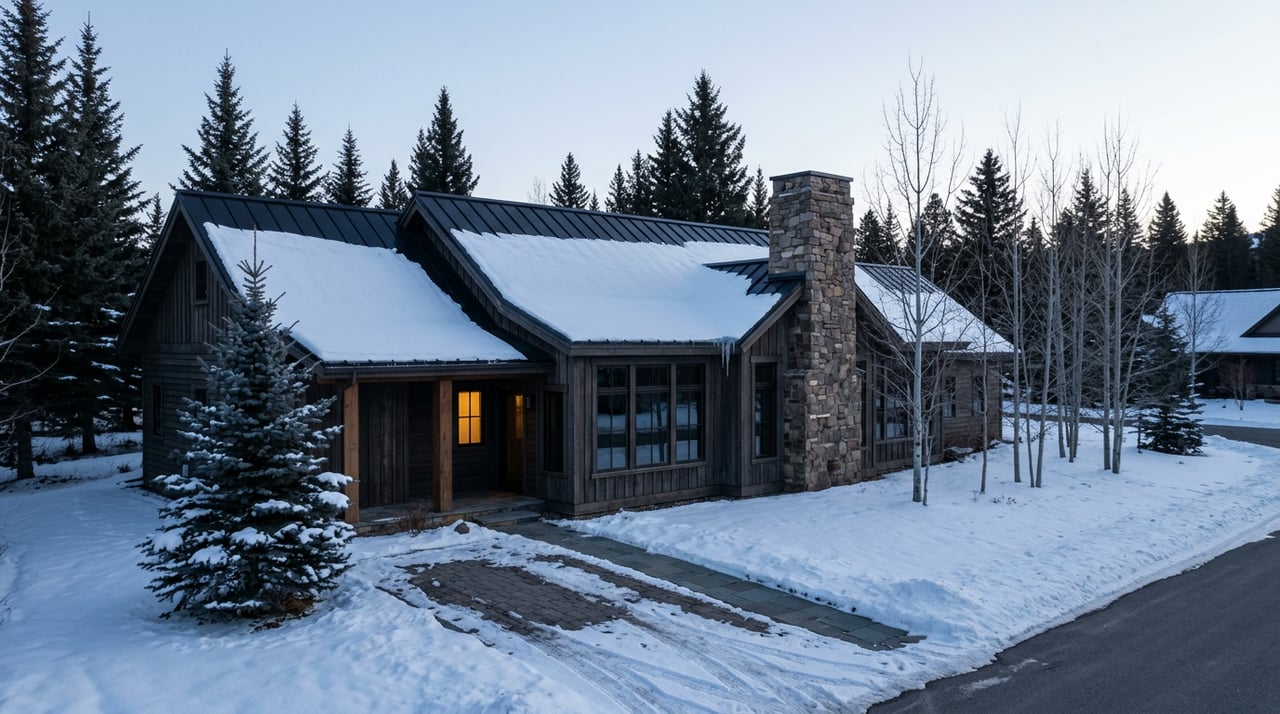
The Corner That Runs the Whole Weekend
September 24, 2026
September 24, 2026
If you live in Lakota, you already know your neighborhood by a name most of the town uses without thinking twice: the Lakota light. It's the first traffic signal you hit coming out of downtown Winter Park, and it shows up in driving directions that have nothing to do with your street. Turn right at the Lakota light for North Bench Lot. Go straight through the Lakota light for the G Lot. Your subdivision isn't just a place people live across from the resort. It's the fork in the road that decides which parking lot half the mountain ends up in on a Saturday morning.
That's worth sitting with for a second, because this season the fork just got a lot busier, an hour earlier than it used to.
On September 15, 2026, Winter Park Resort announced that lifts will open at 8 a.m. on Saturdays and Sundays for the 2026-27 season, running from December 5, 2026 through April 4, 2027, weather and conditions permitting. Weekday hours stay put at 9 a.m. to 4 p.m. The weekend change applies to every guest, no pass upgrade required, and the resort says it adds up to roughly 36 extra hours of skiing and riding over the season, close to four and a half additional days.
The same announcement bundled in a handful of other changes worth knowing if you're planning your winter around the mountain across the highway. The Rope Drop Club rewards program is getting bigger, with scans in November and December unlocking extra lift-access days starting as early as January 1, 2027. The resort spent close to $300,000 on new summer grooming equipment, including two machines built for vegetation management and fire mitigation, which the resort says should translate into more terrain open earlier in the season. Mary Jane, which marked 50 seasons in 2026, gets a 51st-season celebration the second weekend of January 2027. And the Winter Park Express train returns from Denver Union Station sometime in December, though 2026-27 ticket dates haven't been announced yet. Amtrak has made that call in early November each of the past two seasons, so that's the window to watch.
None of that is small. But for the people who live at the light, the headline isn't the extra hour of skiing. It's what that hour does to the thirty minutes before it.
Here's the math nobody at the resort is going to walk you through, because it's not their job to think about your driveway.
The free weekend shuttle service that runs guests from the Old Town park-and-ride lots, the ones just past the Lakota light, to the base near the Cabriolet, operates from 7:30 a.m. to 6:30 p.m. on weekends and holidays. Under the old schedule, with lifts opening at 9 a.m., that gave anyone catching the first shuttle a 90-minute cushion between stepping off the bus and first chair. Coffee, boot buckles, a lap around the base to find your friends. Plenty of room.
Under the new 8 a.m. start, that same 7:30 shuttle now drops you with 30 minutes to spare. Same bus, same route, a third of the breathing room.
Mary Jane's side of the mountain has its own version of the squeeze. The free park-and-ride shuttles serving Mary Jane's lots run every half hour starting at 8:15 a.m. That's fifteen minutes after the lifts on that side of the highway are now scheduled to start turning. It's not a long gap, and the resort's language leaves room for early runs to adjust, but it's the kind of detail that only shows up when you line up two schedules that were built for different eras and never got reconciled for each other.
None of this is a crisis. It's a scheduling seam, the kind every ski town eventually gets when a resort adds capacity faster than its transit system catches up. But it's the kind of seam that matters more the closer you live to it, because your options for absorbing it are different than everyone else's.
Lakota sits less than a quarter mile from the resort base, close enough that walking to the lifts or riding the free Lift shuttle has always been one of the neighborhood's practical advantages over lodging that requires a drive. That advantage gets more valuable this season, not less, because the squeeze we just walked through mostly hits the people who are driving in.
North Bench Lot, the one you reach by turning at the Lakota light, already fills early on busy mornings. Resort workers and early race teams start claiming spots there from 7:15 a.m. A weekend lift start that's now an hour earlier doesn't erase that pattern, it just moves everyone's internal clock up to match, which means the lot that used to feel comfortably full by 8:30 is more likely to feel that way by 7:30 instead.
If you're driving in from outside the neighborhood, that's worth planning around. If you're already living close enough to skip the lot entirely, the calculation is simpler: this is the season where walking out your door beats waiting on a bus that was built for a schedule the mountain just changed.
The town's free transit system, known as the Lift, still runs eight routes connecting the resort to downtown Winter Park, Fraser, and Granby, with winter hours stretching from 7:30 a.m. to midnight and on-call evening service after 6 p.m. It's a genuinely useful system for getting around without a car once you're off the mountain for the day. It just isn't built to solve the specific 30-minute gap that now sits between the first weekend bus and first chair, and that gap is the one detail this year's schedule change quietly created.
A few other pieces of the season are worth keeping half an eye on, even if they don't change your Saturday morning math. The resort hasn't set an opening date yet, sticking with its recent pattern of opening as soon as conditions allow rather than committing to a fixed day. The winter version of the Alpine Fairy Trail, the whimsical trail concept the resort debuted over the summer, is expected back with more details to come. And the Rope Drop Club's new dedicated lift lanes at the Gondola and Super Gauge lifts are a small perk that could matter if you're someone who chases first tracks on a regular basis.
None of these are reasons to change how you live in Lakota. They're the kind of detail that rounds out a season, the sort of thing you'd mention to a neighbor at the mailbox rather than plan your week around.
The Lakota light was never going to change. It's still the first signal out of town, still the landmark that shows up in someone else's driving directions before it shows up in yours. What changed is the rhythm on the other side of it. An hour earlier on the mountain means an hour earlier at the lot, the shuttle stop, and the light itself. If you've got a quarter mile and a good pair of boots between you and the base, that's an easy trade. If you're driving in from farther out, it's worth building the new math into your Saturday.
Either way, the corner keeps doing what it's always done for this neighborhood: quietly running the whole weekend, whether or not anyone else notices.
If you're curious how Lakota's location, walkability, or resale patterns compare to other pockets of Grand County, Laura Zietz has spent years watching how this specific stretch of Winter Park behaves through every kind of season. Reach out anytime to talk through what you're seeing on your own block.
Whether you’re looking to buy or sell – let Laura show you the way.

LAURA ZIETZ
78977 US Highway 40 Winter Park CO 80482